
How You Can Complete a Renew Without Risking Your Coverage
Insurance is now an integral part of any business across most industries. Among the kinds of insurance in the market, cyber insurance has been gaining popularity in the past few years. Technology consultant companies stress its importance as threats are no longer just in the physical aspect of the business but also in its digital form where business data and customer information are stored. Cyber insurance applications, however, are not just different but also dynamic. This is because cyber disasters have become more complex and threats have become more serious in recent years. In 2023 and 2024, the insurers faced large-scale attacks that led to a shift in focus. These breaches caused businesses financial losses and costly disruptions. As a result, insurers tightened their renewal requirements.
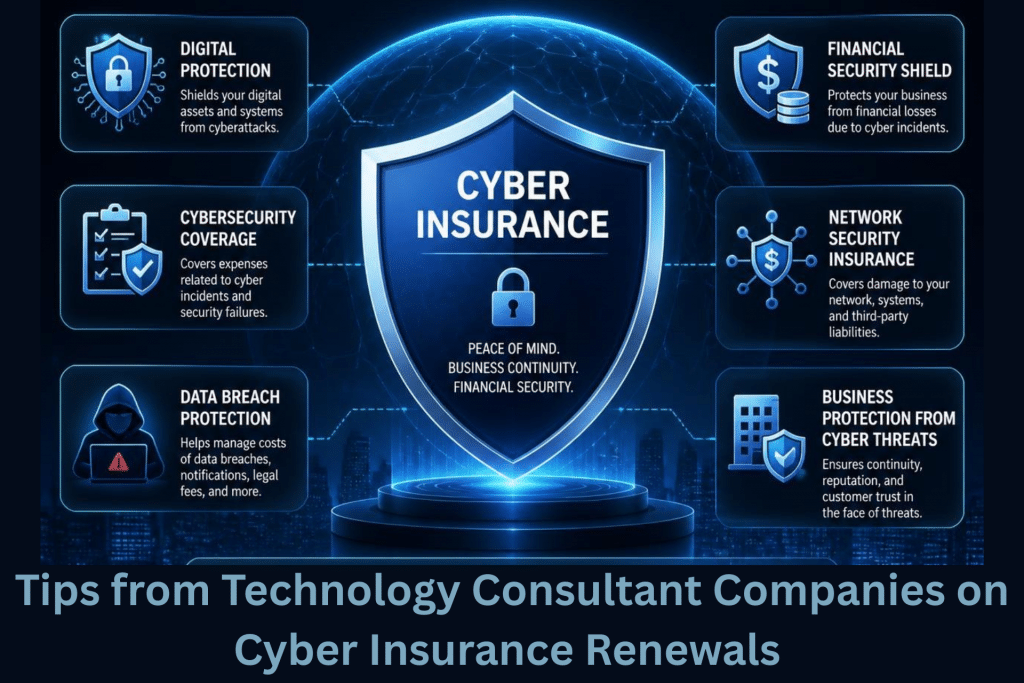
Tips from Technology Consultant Companies on Cyber Insurance Renewals
Response to Real World Cases
In 2023, thousands of organizations around the world were impacted by the MOVEit data breach. The incident revealed vulnerabilities with trusted software vendors. Subsequently, in 2024, the Change Healthcare ransomware attack also happened that affected healthcare operations for weeks. Shortly after that, another big scam happened wherein a fake wire transfer was approved by AI-generated executives. These events and other similar cases pushed cyber insurance companies to redefine their approach to cyber risks among insurers and their technology consultant companies. Today, businesses with confidential data such as healthcare, legal, accounting, and retail businesses are under more pressure. As a result, these industries also face the longest applications since some of the largest insurance claims came from these sectors.
Stronger Backup Requirements
Recent applications and renewals now require businesses and their partner technology consultant companies to answer questions regarding backup. Insurance providers require details that expect more than a basic response. In most cases, insurance providers want to know if the backups are continuously immutable or air-gapped. Moreover, they also require recent restoration testing done. Moreover, insurers also check if backup systems are accessible to administrators.
Technology Consultant Companies Explain Importance of These Questions
Insurance providers want to know if your backups are effective and rely on secure storage and dedicated administrator credentials. Additionally, they also can incorporate regular restore testing and appropriate retention periods. Many businesses that implement these controls along with their technology consultant companies tend to have easier renewals. On the other hand, if any answers are not completed, they will typically result in further review.
In the same vein, the importance of multi-factor authentication has also gained increased focus. This is because insurers want tighter authentication processes and have become a standard insurance requirement. Moreover, MFA should be used for email, VPNs, administrator accounts, remote desktops, and service accounts. Authentications are also as important. For most insurers, single text message verification is not enough. This is because recent attacks using phone numbers are among the most favored targets for criminals with SIM-swapping attacks. Instead, authenticator applications and hardware tokens are preferred as they offer much greater security.
Privileged Access Deserves Extra Protection
Many modern renewal forms now require extra protection for privileged access. Technology consultant companies explain that administrator accounts need more than just standard password management. Instead, there should be another layer of protection or authentication for these accounts that can access sensitive administrator credentials. By having an additional layer of protection, systems that keep important information are more secure. Moreover, they should also automatically rotate passwords and keep track of admin activities so that in case someone steals the credentials, they can’t do much for long.
For insurance providers, businesses that use a common admin password are at greater risk. Additionally, changing passwords on a yearly basis is also not considered a good underwriting practice. Moreover, lost activity logs are also a no-go since it reduces security measures.
Although insurance providers rarely expect perfect environments immediately, they do expect answers that are honest. In the same vein, those businesses with reliable partner technology consultant companies and improvement plans are favored. This also includes well-configured administrator accounts and strong authentication that shows enhanced security and renewal results.
Wire Transfers Need Better Verification
Financial fraud has also become more convincing with the use of AI. In response to this, wire transfer security is now a regular part of renewal applications. Insurers are looking for assurance of secure transactions, especially when big payments are involved. In this case, email isn’t sufficient anymore and now needs a callback process for better security. On top of this, employee awareness also matters, so they are aware of voice cloning and deepfake videos by AI.
Antivirus Alone No Longer Meets Expectations
Although good old-fashioned antivirus software remains valuable. Insurers, however, now want to see more robust security from companies and their reliable technology consultant companies. There should be an endpoint detection and response that constantly watches device activity for threats to prevent damage from occurring further. Moreover, managed detection and response add around-the-clock security specialists to look into alerts at all times of the day.
Many applications now also include detailed cybersecurity questions. This is because insurance companies are looking for full end-to-end coverage of all devices. So, if the business is thinking about upgrades for the future, they also need to specify realistic deployment timelines.
Vendor Security Matters More Than Ever
Modern businesses and even their trusted technology consultant companies depend heavily on outside software providers. Such partnerships, however, add more cybersecurity concerns. Hence, insurers ask for vendors to store sensitive information and often request your five most important providers. From them, they also want to see proof of security credentials. Although there is no need to do a security audit, your business also needs to know who manages your data. These simple security questions are an example of good vendor management practices.
Never Overstate Your Security
For insurance, correct answers are always crucial at each renewal. It is important not to claim protection when it is not available. This is because, just like any insurance, your environment will be subjected to an investigation following incidents. As such, when there are disparities between what is declared and what is real, serious issues arise and insurers may deny claims. Moreover, even earlier claim payments might even be repaid. Hence, it is much safer for your business to be honest.
A Simple 30-Day Renewal Plan with Your Partner Technology Consultant Companies
The earlier you renew, the less stressful it will be. Plus, small adjustments to your system can greatly improve your security position. To start, make sure to audit all critical systems for authentication. This means there is a need to improve SMS verification with more robust authentication. This is especially crucial for administrator accounts. Next, ensure to have backup configurations are checked regularly and thoroughly. Make sure to test restoration procedures and record successful results. In the same vein, make sure backups in place are immutable or air-gapped. You should also go over payment approval processes. This means you need to create written wire transfer policies for larger transactions. This also includes staff training and education to identify current social engineering attacks.
In the same vein, businesses should also check the endpoint security before submission. Ensure that all devices are using enhanced protection. On the other hand, ask for a security report from significant software vendors and update your incident response plan and practice it regularly. Lastly, respond truthfully to all renewal questions. Document remaining gaps with realistic completion dates. The long-term protection is reinforced by a truthful application.
Does your company need further help with your insurance application or renewal? We can help!
Call us today!
Watch Our Latest Tech Videos From EB Solution

Get A Free Immediate Quote For IT Services
From EB Solution Today.
Why choose EB Solution:
- Around-the-clock IT services
- Expert technology professionals
- Single source for all your IT
- Reliable data backup solutions
- Certified cybersecurity experts
Ready to make the move to EB Solution?
Fill out the form to the right to get your free immediate quote.
Interested?
 Call Now