
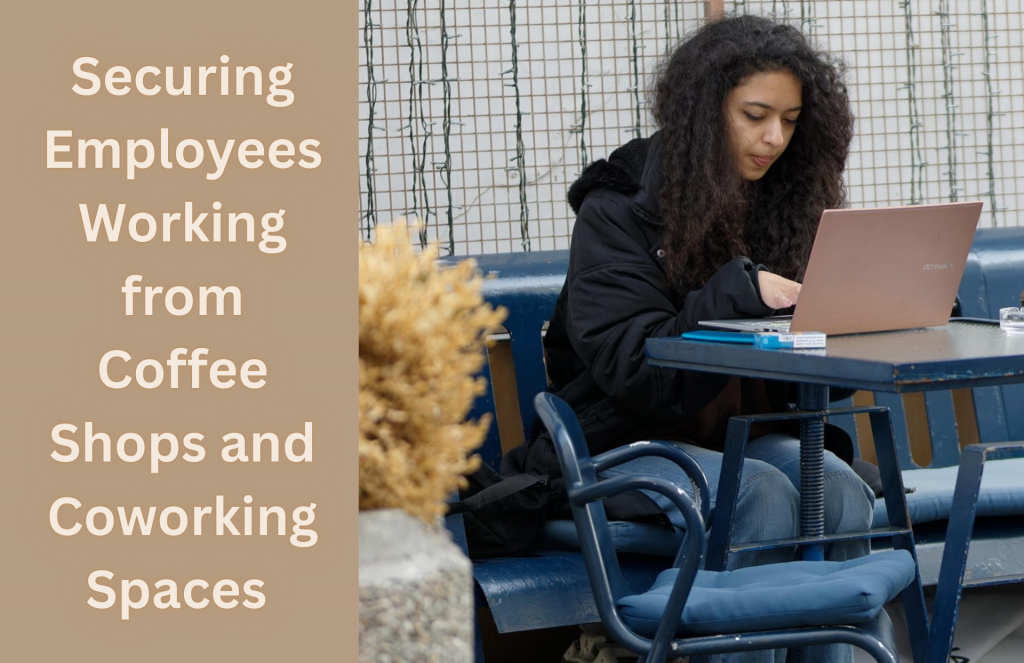
Securing Employees Working from Coffee Shops and Co-working Spaces
The modern-day workplace is no longer confined within office walls. These days, remote and hybrid work has become the norm during and following the COVID period. As such, it is now possible to have employees work at home, cafes, libraries, airports, and co-working places. These settings are commonly called third places, or places beyond the office. Although third places facilitate flexibility, comfort, and productivity, they also present security threats. Company IT services professionals say that many organizations do not take this into consideration.
It is noted that these areas do not have the physical and cyber security that exist in corporate offices. Therefore, employees can, knowingly or unknowingly, share sensitive company information without effective policies and protection. That is why company IT services experts urge business owners to change their methods of securing information regardless of the location where business is done. In this day and age, cybercriminals are naturally drawn to public settings. These open networks, shared seating, and distracted workers, make it an easy opportunity to take advantage of. Hence, remote workers are exposed without direction and the right equipment. Powerful policies assist teams in operating safely anywhere.
Company IT Services Provider Shares ‘Third Place’ Office Policy Guidelines
Company IT Services Experts Explain the Risks of Public Networks
Free Wi-Fi networks look comfortable and innocent enough. However, in reality, the majority of them have improper encryption and access restrictions. Therefore, data traffic can easily be intercepted by attackers, and all information transmitted through these networks can be exposed. Usually, cybercriminals set up Wi-Fi networks with common names such as Free Wi-Fi or cafe-branded connections. Employees that work within these public spaces then connect without authentication. As a result, the attackers can silently track activity. This is referred to as a man-in-the-middle attack. Even networks with passwords can be unsafe, warned experts from company IT services providers. This is because common passwords are passed on among strangers. That is why you should never trust public networks.
Mandatory VPN Usage, Recommends Company IT Services Professionals
Cybersecurity experts in company IT services partners recommend VPNs as an essential security tool for those with staff working remotely. A VPN will encrypt any data that is leaving a network, hence providing a secure tunnel, even on insecure public Wi-Fi. Therefore, anyone who passes by traffic will encounter indecipherable information. VPN must be compulsory when not in the office; however, this necessary security tool is usually not used when under pressure. That is why any solution should be easy, dependable, and quick. This makes automatic VPN favorable as it also minimizes the possibility of human error. The devices are expected to connect once they have been switched on. Without the protection of the active VPN, access to the company’s systems should be limited. Stability brings about continuity.
Visual Exposure and Screen Privacy Risks
Not all threats are digital. On top of lurkers online, there is also the risk of visual exposure which can be very dangerous. Visual hacking is the act of unauthorized accessing sensitive screen information. It does not need technical ability, just some unguarded moments. This comes from screens being visible from many different angles due to public seating. In which case, there may be short but evident emails, financial information, and internal documents that can get photographed unnoticed. Because of this, privacy screen filters that restrict the side-angle visibility must be made mandatory, according to company IT services partners. Another option is the use of privacy displays that provide the same level of protection. It must be remembered that positioning and awareness are important in crowded environments.
The Danger of Physical Theft
Open areas pose a significant threat of device theft. Laptops and tablets can be stolen in a few seconds by robbers keeping a close eye on careless employees. Such opportunities are short-lived and expensive. That is why remote work policies should include emphasis on device awareness where employees are supposed to keep equipment within their reach and never unattended in public places. Another security measure is the use of cable locks. This does not encourage opportunistic actions and is widespread in co-working areas. A combination of awareness and physical deterrents is effective.
Managing Conversations and Verbal Information
Privacy is not assured with noise as discussion goes far beyond what is anticipated in social places. Hence, confidential discussions can still be heard by prying ears. Therefore, employees are not supposed to make sensitive calls in common areas, and sensitive meetings need to be relocated to confidential places. Private cars, exclusive rooms, or quiet outdoor areas are necessary in these cases. Moreover, if it can be written, it is best to have written communication as it is less risky, albeit not risk-free. It must be emphasized that convenience must always be secondary to discretion.
Importance of Clear Remote Work Guidelines
Employees require expectations and written policies eliminate uncertainties as well as facilitate implementation. Therefore, rules must be explicit regarding the use of public Wi-Fi. Furthermore, stressing the necessity of VPNs, physical security, and communication habits should be clear and cannot be misconstrued. Justification of the reasons why rules are made enhances compliance. On top of that, periodical assessment of policies should also be done to see if they are effective, or if there is a need to readjust or modify. This is essential since threats and technologies are changing rapidly.
Supporting Secure and Flexible Work with the Right Company IT Services Partner
Third-place work facilitates flexibility and employee satisfaction, however, this freedom comes with responsibility. Having clear policies with the right tools provides the best protection. Moreover, trained workers serve as the first line of defense as active protectors against security threats.
Here at EB Solution, we pride ourselves on being reliable IT partners to numerous companies. If you are looking to secure your business while keeping your staff happy with remote and hybrid work setup, call us today.
Our expert IT and cybersecurity professionals are here to assist you!
Tech Insights From EB Solution
Watch Our Latest Tech Videos From EB Solution

Get A Free Immediate Quote For IT Services
From EB Solution Today.
Why choose EB Solution:
- Around-the-clock IT services
- Expert technology professionals
- Single source for all your IT
- Reliable data backup solutions
- Certified cybersecurity experts
Ready to make the move to EB Solution?
Fill out the form to the right to get your free immediate quote.
Interested?
 Call Now